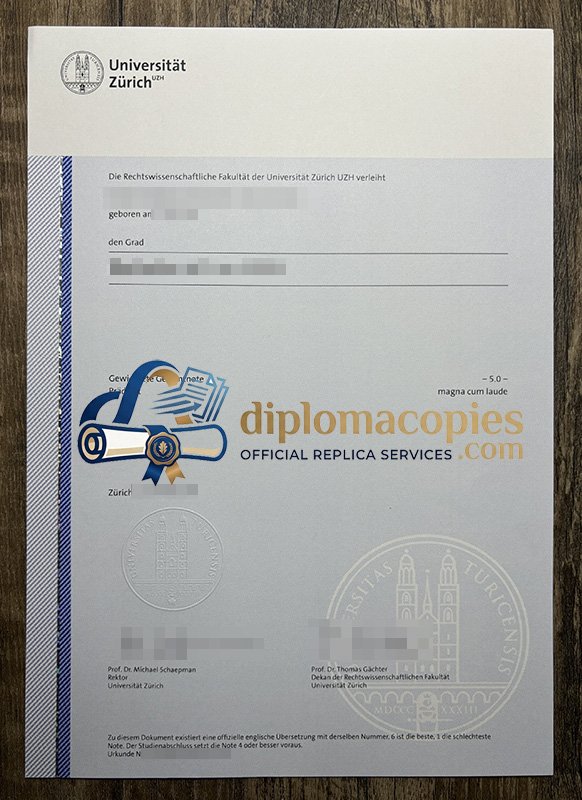
The University of Zurich (Universität Zürich, UZH) is Switzerland’s largest university and one of Europe’s leading research institutions. Founded in 1833 as the first university in Europe established by a democratic state rather than a monarch or the church, UZH combines a broad disciplinary spectrum with a strong tradition of scientific excellence—including 12 Nobel Prizes associated with its researchers. Universität Zürich diploma, Universität Zürich degree, Universität Zürich certificate.
With over 28,000 students and a clear strategic focus on interdisciplinary research, innovation, and societal impact, UZH occupies a distinctive position among European comprehensive universities.
Founded: 29 April 1833; the first European university founded by a democratic state
Location: Zurich, Switzerland
Student Population: 28,785 (2025)
Ranking: #98 in QS World University Rankings 2027; #100 in QS 2026
Nobel Connections: 12 Nobel Prizes awarded to UZH scientists, including Albert Einstein (Physics, 1921), who received his PhD from UZH in 1905
Tuition (per semester): CHF 720 for Swiss students; CHF 1,220 for foreign Bachelor students; CHF 820 for foreign Master/PhD students, Where can i get to buy Universität Zürich certificate?
International Community: Almost half of professors, 45% of employees, and one-fifth of students come from abroad.
How do i buy a Universität Zürich diploma?
UZH was founded on 29 April 1833, a date still celebrated annually with the Dies academicus ceremony. Its establishment by the liberal democratic state of Zurich marked a departure from the older model of universities founded by monarchs or ecclesiastical authorities. This origin shaped the institution’s enduring commitment to openness, academic freedom, and public benefit. #UZH diploma, #Universität Zürich degree.
The university’s historical scientific legacy is substantial. Twelve Nobel Prizes have been awarded to UZH-affiliated scientists across physics, chemistry, and medicine, beginning with Wilhelm Conrad Röntgen in 1901 and including Erwin Schrödinger (1933), Walter Hess (1949), and Alex Müller (1987).
Albert Einstein’s relationship with UZH is particularly notable: he received his doctorate there in 1905, the same year he published his groundbreaking papers on special relativity and the photoelectric effect.